

RJSC Company Registration in Bangladesh is handled exclusively by the Registrar of Joint Stock Companies and Firms (RJSC), the sole government authority for this process. Larger businesses typically register as limited companies, where two or more entrepreneurs come together, pool significant investment, and combine the diverse expertise of multiple directors.
Several factors have positioned Bangladesh as one of the world’s most efficient emerging business hubs, including competitive labor costs, access to seaports and airports, strong road and rail connectivity, and reliable electricity and fuel supply.
The authority responsible for Joint Stock Company Registration in Bangladesh is commonly known as RJSC. The RJSC approves and registers a wide range of business entities and services, including:
- Liaison Office / Representative Office Registration
- Society Registration
- Company Annual Return / Schedule X Submission
- Company Share Transfer and Share Allotment
- Company Winding Up
- Certified Copy Issuance
- Partnership Firm Registration
- Branch Office Registration
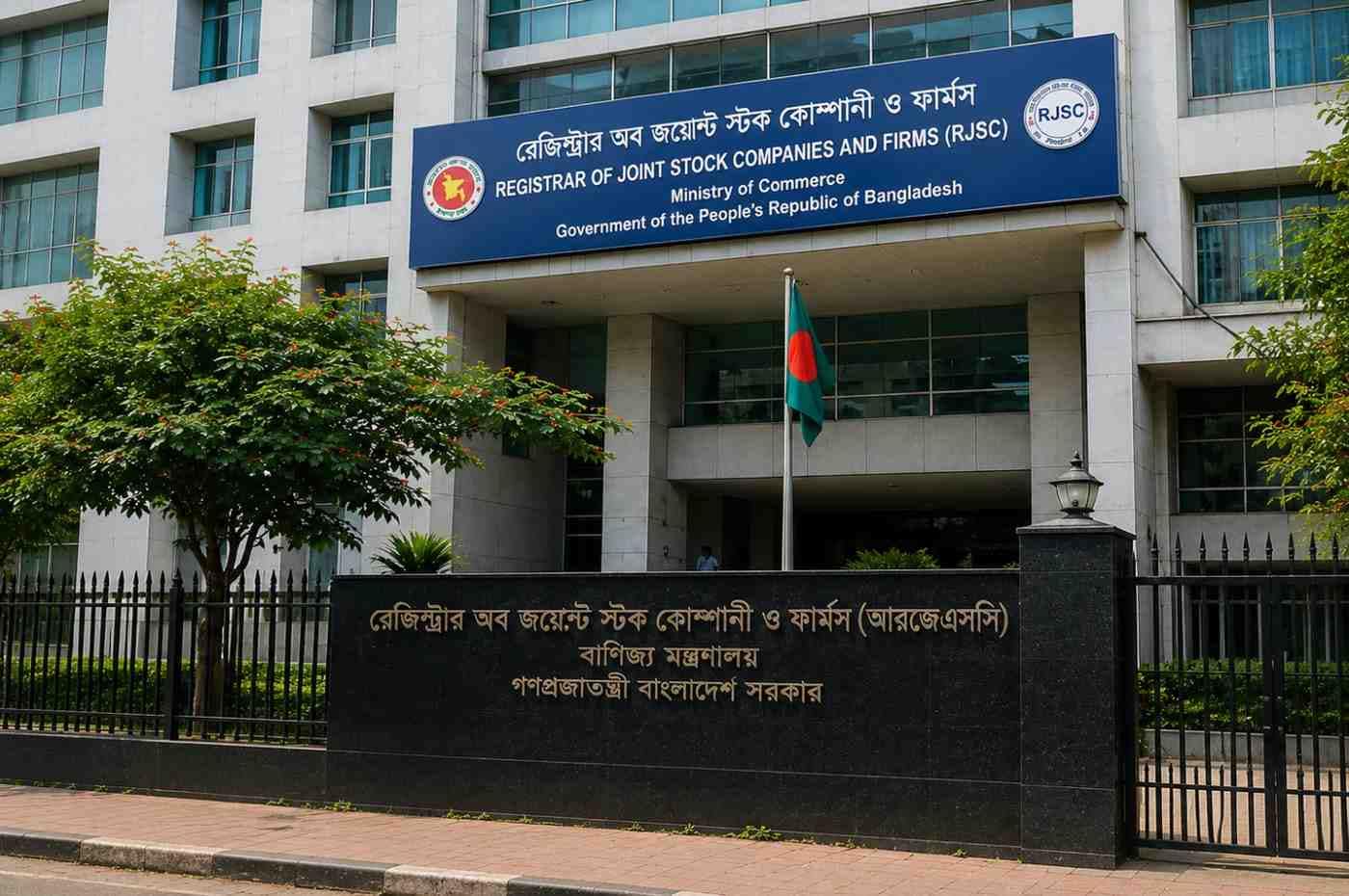
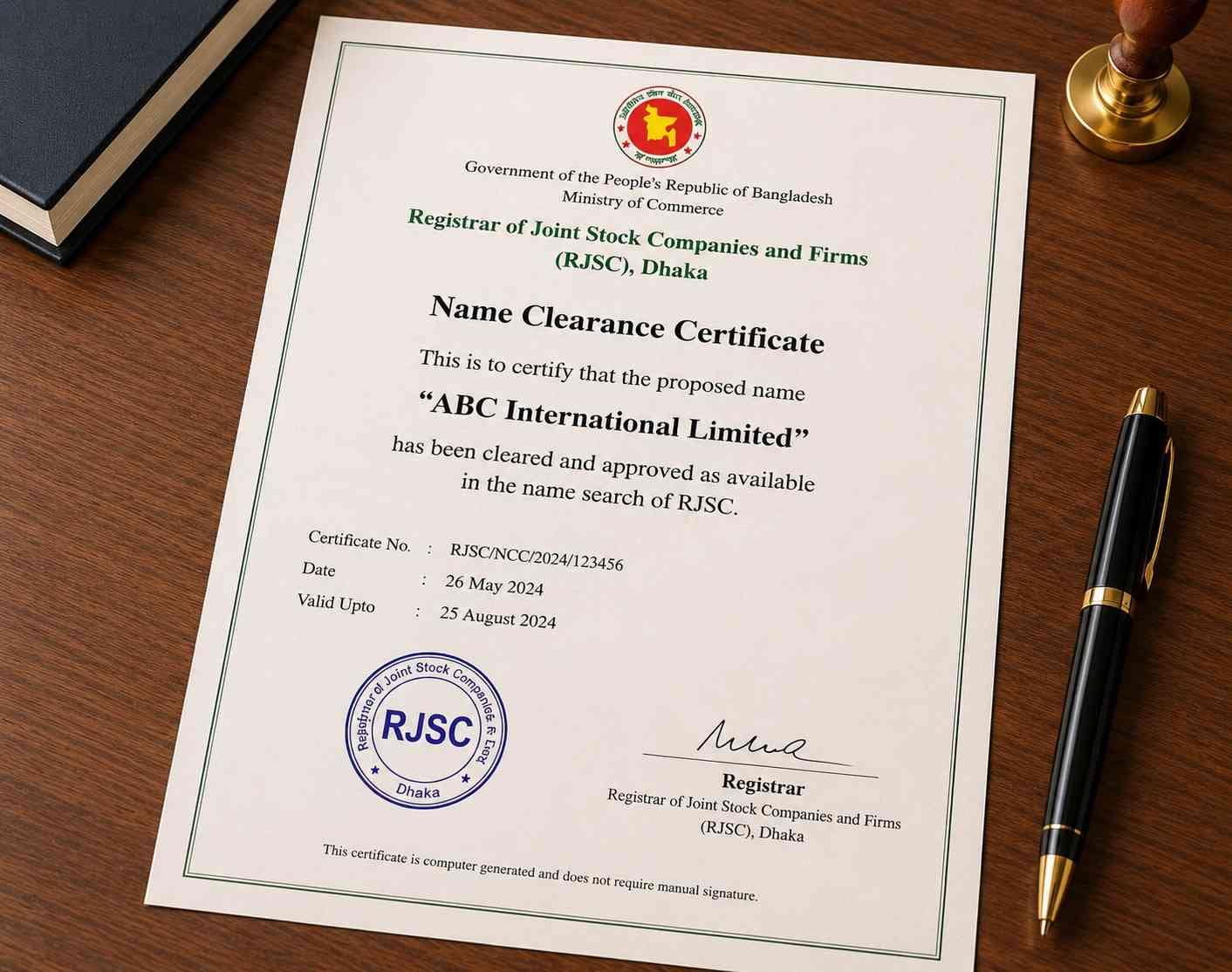
Companies in Bangladesh operate under the Companies Act, 1994. Any eligible individual aged 18 years or older — whether Bangladeshi or foreign — is allowed to establish a company through RJSC registration.
Private Limited Company registration is the most popular business structure in Bangladesh, where shareholder liability is limited to the value of their shares. Bangladesh is highly open to foreign ownership, allowing up to 100% foreign equity investment in most sectors. A few sectors require prior government approval, while some restrict both foreign and local investment. Foreign investors also have the right to purchase land and property in the name of their registered company. There is no officially mandated minimum capital requirement, though in practice, at least $1 (USD) is typically set as the nominal minimum.
Foreign investors should note that an inward remittance of at least $100,000 is typically required if they wish to employ foreign staff or establish a manufacturing facility in Bangladesh.
RJSC Company Registration in Bangladesh – Complete Guide
Kinds of company available in Bangladesh
| Business Type | Min. Shareholders/Partners | Max. Shareholders/Partners | Governing Law |
|---|---|---|---|
| Private Limited Company | 2 | 50 | Companies Act, 1994 |
| Public Limited Company | 7 | Unlimited | Companies Act, 1994 / SEC Act, 1993 |
| Partnership Firm | 2 | 20 | Partnership Act, 1932 |
| Joint Venture Company | 2 (local + foreign) | No restriction | Companies Act, 1994 |
Private Limited Company
Most companies in Bangladesh are registered as private limited companies, where shareholder liability is limited to their share capital. A private limited company requires a minimum of two and a maximum of fifty shareholders to complete RJSC registration. It must also have at least two directors to manage company operations, in accordance with the Companies Act, 1994.
Most of the business sectors in Bangladesh are allowed 100% foreign ownership. In a few sectors, however, you need to get prior approval from the government, and a few sectors restrict both local and foreign investment. All directors can be treated as shareholders. After completing the incorporation or RJSC Company Registration in Bangladesh, the company can be allotted shares to get new Shareholders or can be transferred their shares to others.
Public Limited Company
A Public Limited Company is a larger legal entity registered through RJSC. To establish a public limited company, you need a minimum of seven shareholders (individuals or businesses) and no upper limit on shareholders. The company must also have at least three directors, all above 18 years of age and qualified under Bangladeshi law.
A public limited company can invite people to buy its shares to raise funds to operate a business. These kinds of companies must comply with Bangladesh’s Securities and Exchange Commission Act 1993. Public limited companies need to be members of the Dhaka Stock Exchange and Chittagong Stock Exchange if they want to trade their shares.
Representative Office Registration in Bangladesh
A representative office can be established if there is a parent company abroad. This office is not able to earn any local income or engage in commercial activities. Its purpose is limited to coordination, communication, and marketing efforts. All expenses and operational costs related to the Representative Office are covered by the parent company.
Representative Office Registration in Bangladesh requires registration with the Bangladesh Investment Development Authority (BIDA), the Registrar of Joint Stock Companies and Firms (RJSC), and the Bangladesh Bank.
Branch Office Registration In Bangladesh
A branch office in Bangladesh is considered an extension of its overseas parent company rather than a separate legal entity. Registration with BIDA is mandatory, and its regulations must be followed. With government approval, branch offices can engage in commercial activities, though the parent company remains fully liable for the branch’s actions. A branch office enjoys more operational freedom and flexibility than a liaison office, as it is authorized to conduct commercial activities.
Setting up a Representative Office or Branch Office in Bangladesh involves several steps, including submitting documents to BIDA, obtaining a Trade License and TIN Certificate, opening a bank account, securing Bangladesh Bank approval, registering with RJSC, and completing VAT registration.
Partnership Firm Registration in Bangladesh
Partnership business is another popular structure in Bangladesh. The Partnership Firm Registration process is broadly similar to standard company registration at RJSC. A minimum of 2 and a maximum of 20 partners can establish a partnership firm.
A partnership business is commonly known as a Partnership Firm in Bangladesh, established under the Partnership Act, 1932. Partnership Firm Registration, like Limited Company Registration, is processed through RJSC (Office of the Registrar of Joint Stock Companies and Firms).
A minimum of 2 and a maximum of 20 entrepreneurs can unanimously agree to set up a partnership firm. All partners must sign a partnership deed outlining key terms such as profit-sharing ratios, individual responsibilities, business scope, and operating rules. A minor (under 18 years) may also be admitted as a partner if all existing partners unanimously agree.
A partnership agreement — commonly known as the partnership deed — is essential for outlining the firm’s activities, vision, and business goals. It must be executed on a Tk. 4,000 non-judicial stamp paper.
Joint Venture Company Registration in Bangladesh
Joint Venture Company Registration in Bangladesh allows local and foreign entrepreneurs to jointly invest capital and operate commercial activities, culminating in a Company Incorporation Certificate from RJSC.
In a joint venture, foreign and local entrepreneurs jointly manage the business and invest equity capital, even though Bangladesh legally permits up to 100% foreign equity investment in most sectors.


There is no minimum or maximum investment restriction for foreign entrepreneurs forming a joint venture in Bangladesh. However, a joint venture agreement is required, detailing both investors’ personal information, business terms, capital contributions, and mutual understanding of commercial activities.
Foreign Company Registration in Bangladesh (Foreign-owned 100% equity investment)
Bangladesh is widely open to overseas investment, allowing up to 100% foreign equity in most sectors. Foreign Company Registration in Bangladesh means overseas entrepreneurs invest the entire paid-up capital or equity to start a business.
Directors and shareholders must be at least 18 years old and hold qualifying shares as specified in the Articles of Association. Foreign investors must transfer the required share capital (in USD equivalent) into the proposed company’s bank account, in accordance with the Companies Act, 1994 and RJSC guidelines.
Directors can also serve as shareholders, with a minimum of 2 and a maximum of 50 shareholders/directors. 100% overseas investment is accepted under Bangladeshi law.
Company Share Transfer in Bangladesh
Company Share Transfer at RJSC is an ongoing process for both private and public limited companies in Bangladesh. When an existing shareholder no longer wishes to remain a Shareholder, Director, or Chairman, they can transfer their shareholding to another shareholder or individual. Existing shareholders are typically given priority to purchase the departing shareholder’s shares to strengthen business continuity.
The board of directors may also decide to bring in a new shareholder or director by filing Form XII with RJSC. When the board decides to increase business capital, they proceed with either a Company Share Transfer or Company Share Allotment to increase the company’s share capital.

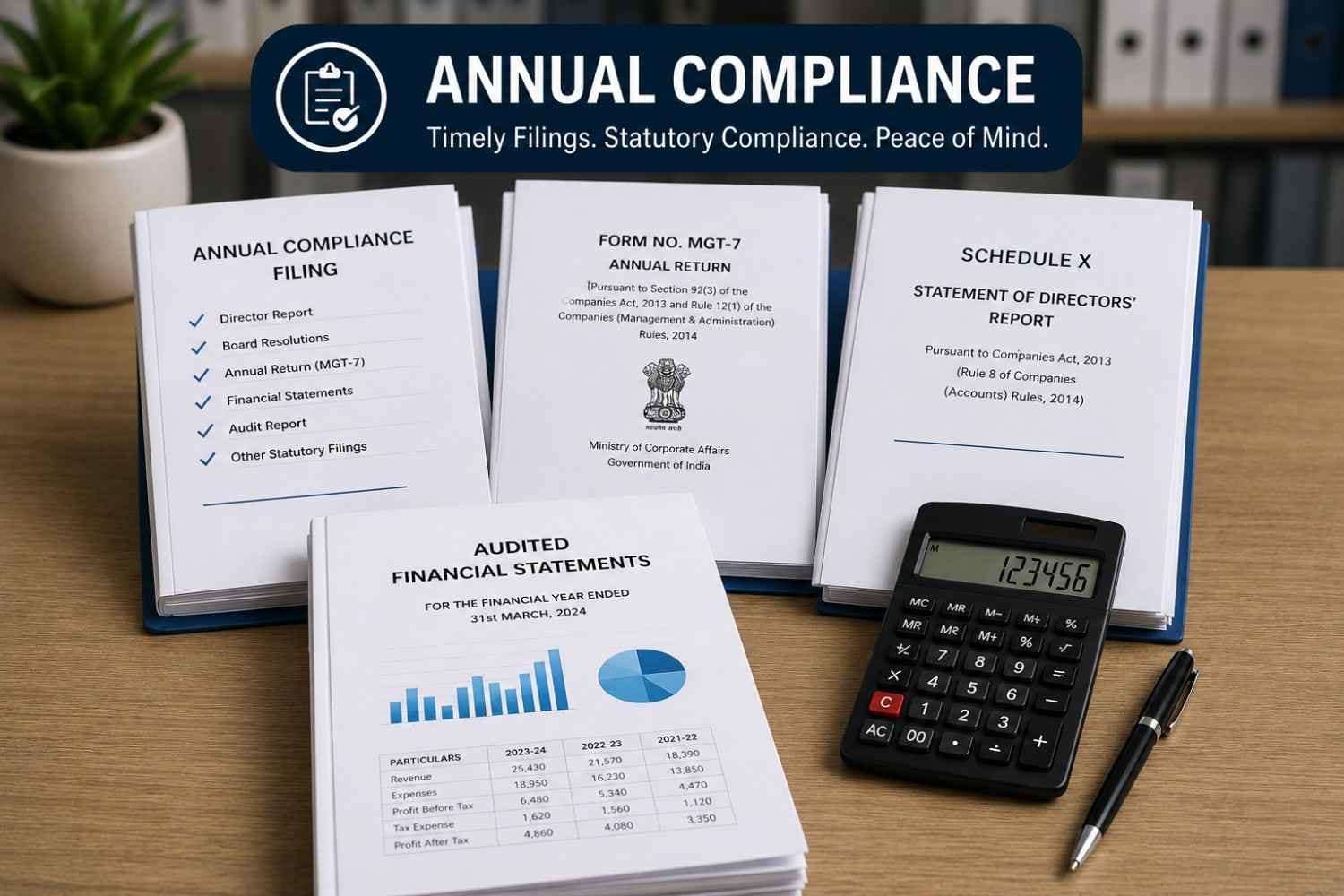
RJSC is widely known as the Joint Stock Company Registration Office and legal authority for RJSC Company Registration in Bangladesh, Company Share Transfer in Bangladesh, Share Allotment, winding up, Schedule X updates, and other joint stock company-related activities.
Company Share Allotment in Bangladesh/ RJSC Share Allotment in Bangladesh
Company Share Allotment at RJSC, or Company Share Increase, is a routine process for limited companies in Bangladesh. Company Share Allotment in Bangladesh is also known as RJSC Share Allotment in the country. If the company (Board of Directors of the company) wishes to increase its business capital, at that time the company (Board of Directors) gets decision to increase/allot or increase the company’s paid-up capital by issuing more company equity shares for existing shareholders and holding newly allotted equity shares to appoint as shareholders or directors of the limited company, which is approved or certified by the RJSC in Bangladesh.
Existing shareholders or directors often seek newly allotted equity shares to expand their involvement in the business. Increasing paid-up capital strengthens business capacity and competitiveness in the market. Company Share Allotment in Bangladesh is a unique way to expand the company’s business capability by increasing paid-up capital / Share Allotment of the Limited Company in Bangladesh.
The Newly allotted Shareholders or directors have to deposit the share money to the company’s bank account before the document submission to RJSC and attach it to the personal bank statement of the new Shareholders or Directors to ensure the allotted share money is transferred to the company’s bank account.
Company Winding up
During Company Winding Up in Bangladesh, any surplus assets — subject to rights attached to special classes of shares — are first used to repay the capital paid up on ordinary shares. Any remaining balance is then distributed among ordinary shareholders in proportion to their shareholding at the start of the winding-up process.
With the sanction of any extraordinary resolution of the members, or any part of the assets of the Company, including any shares in another company or companies, may be divided amongst the members of the company in specie or may be closed and the Company dissolved, but no member shall be compelled to accept shares wherein there is any liability.
A winding-up petition can be filed with the court by the company itself, its creditors, or the Registrar. Once the petition is submitted, the court reviews the case and has the authority to appoint an official liquidator to oversee the winding-up proceedings.
RJSC Company Annual Return Submission/ Company Schedule X Submission in Bangladesh
RJSC Company Return Submission is a mandatory process for limited companies in Bangladesh. Every fiscal year, Schedule X Submission must include the company’s audited financial statements — failure to comply results in fines for delayed filing. Every limited company must hold an Annual General Meeting (AGM). The first AGM must be held within 18 months of incorporation, and subsequent AGMs must be held at intervals of no more than 15 months thereafter.
FAQ
What is RJSC and why is it important for company registration in Bangladesh?
RJSC (Registrar of Joint Stock Companies and Firms) is the sole government authority responsible for company registration in Bangladesh. It oversees incorporation, share transfers, annual filings, and winding up of all registered business entities.
What types of companies can be registered in Bangladesh?
Bangladesh allows several business structures, including Private Limited Company, Public Limited Company, Partnership Firm, Joint Venture Company, Branch Office, and Liaison/Representative Office — each governed by specific requirements under the Companies Act, 1994.
How many shareholders are required for a Private Limited Company in Bangladesh?
A Private Limited Company requires a minimum of 2 and a maximum of 50 shareholders, along with at least two directors, in accordance with the Companies Act, 1994.
Can foreign investors own 100% equity in a Bangladeshi company?
Yes, most business sectors in Bangladesh allow up to 100% foreign equity investment. However, some sectors require prior government approval, while a few restrict both foreign and local investment.
What is the minimum number of partners required for a Partnership Firm?
A Partnership Firm requires a minimum of 2 and a maximum of 20 partners, registered under the Partnership Act, 1932.
What is the difference between a Branch Office and a Liaison Office?
A Branch Office can engage in commercial activities and generate local revenue, while a Liaison Office is limited to coordination, communication, and marketing activities and cannot earn local income.
How often must a company file its Annual Return with RJSC?
Every registered company must hold an Annual General Meeting (AGM) — the first within 18 months of incorporation, and subsequent AGMs at intervals of no more than 15 months — along with submitting audited financial statements via Schedule X Submission.
Explore our company registration services or contact us for a free consultation.








Leave a Reply