


Closing a business is more than just stopping operations. Company winding up in Bangladesh involves legally dissolving your organization and clearing all outstanding obligations. Winding Up Company in Bangladesh demands strict adherence to local laws to safeguard your interests.
Many entrepreneurs wonder, can a private limited company be closed in Bangladesh? The answer is affirmative, provided you adhere to the correct legal framework. Whether your firm is inactive or has achieved its objectives, understanding the winding up of private limited company in Bangladesh is crucial for compliance.
This company winding up guide Bangladesh provides a clear roadmap for the current year. We will demonstrate how to company Winding Up in Bangladesh while minimizing risks. By adhering to these steps, you ensure a seamless transition and avoid legal complications during the company winding up process.
Key Takeaways
- Closing a business requires formal legal dissolution to avoid future liabilities.
- Private limited entities can be legally closed if specific regulatory steps are followed.
- Compliance with 2026 laws is essential for a successful exit strategy.
- Proper documentation is the foundation of the entire closure procedure.
- Understanding company winding up in Bangladesh is essential before initiating closure.
- Proper documentation is the foundation of the entire company winding up process in Bangladesh.
Understanding the Concept of Company Winding Up
Considering the end of your business operations? You must first understand the formal process of Company Winding Up in Bangladesh. This isn’t just about closing doors. It’s a legal journey that ensures fairness for all stakeholders. Knowing what is company winding up in Bangladesh is crucial for a compliant and stress-free exit.

Defining the Liquidation Process
The company liquidation process in Bangladesh formally ends a company’s existence. Assets are gathered and sold to pay debts. After settling all debts, any leftover funds are given to shareholders. This process is highly regulated to safeguard creditors and employees. By following these steps, your business closure will be legally sound and transparent. It’s a detailed method to settle a company’s financial affairs before it’s deregistered.
Distinction Between Winding Up and Strike-Off
Many confuse the company strike off process Bangladesh with formal liquidation. Though both end a business, they differ in purpose and legal impact. The wrong choice can cause future issues with authorities.
The table below outlines the main differences between these two deregistration methods:
| Feature | Winding Up | Strike-Off |
|---|---|---|
| Complexity | High (Court or Voluntary) | Low (Administrative) |
| Process | Asset realization & debt settlement | Removal from register |
| Suitability | Active companies with assets/debts | Defunct or inactive companies |
Company winding up is best for entities with active financial obligations. Strike-off is for companies that have stopped operating and have no assets or liabilities. Always seek professional advice to choose the right method for your business.
Legal Framework and Relevant Laws Governing Dissolution
The Companies Act 1994 governs the company winding up in Bangladesh process. Understanding the legal aspects of closing a business in Bangladesh is crucial. When you choose to stop operations, it’s vital to follow national laws. This ensures the protection of your interests and those of your stakeholders. Proper company dissolution in Bangladesh is a formal process that requires strict adherence to established rules.
The Companies Act, 1994
The Companies Act, 1994, is the primary legislation for businesses in Bangladesh. It outlines the structure for conducting business affairs, including closure procedures. You must consult this document to understand the winding up company legal requirements Bangladesh for your business structure. Whether you initially completed a company registration in Bangladesh or a foreign company registration in Bangladesh, the dissolution process falls under this same Act.
Ignoring these laws can result in legal issues and financial penalties. By adhering to the Act, you ensure your exit strategy is valid and enforceable. Legal compliance is key to a smooth closure process.
Regulatory Oversight by the RJSC
The Registrar of Joint Stock Companies and Firms (RJSC) overseas corporate filings in Bangladesh. When you start the process, the RJSC checks your compliance to ensure fairness to creditors and shareholders. Knowing the RJSC company winding up Bangladesh rules is crucial for success.
The RJSC keeps the official register and confirms your company’s compliance before striking it off. Keeping in touch with this office helps avoid filing delays. Proactive engagement with the regulator simplifies navigating legal complexities.
Types of Company Winding Up in Bangladesh
There are two main types of company winding up in Bangladesh: Members Voluntary and Creditors Voluntary. Deciding on the right method for your company winding up is crucial. It affects your legal and financial duties. In Bangladesh, there are two main paths for businesses to end voluntarily. Knowing these options helps safeguard your shareholders’ and creditors’ interests.
Members Voluntary Winding Up
This method is for companies that are fully solvent and can settle debts within a set time. You start this process with a formal solvency declaration to the authorities. It’s ideal for businesses that have reached their goals or want to distribute assets and close down smoothly.
Creditors Voluntary Winding Up
For insolvent businesses, creditors voluntary winding up is necessary. It’s required when a company can’t pay its debts and creditors must oversee asset distribution. Choosing the right voluntary winding up company Bangladesh path is key to legal compliance and avoiding legal issues.
| Feature | Members Voluntary | Creditors Voluntary |
|---|---|---|
| Solvency Status | Solvent | Insolvent |
| Primary Goal | Asset Distribution | Debt Settlement |
| Key Oversight | Shareholders | Creditors |
The company winding up method you pick hinges on your financial status. Whether it’s for a solvent or insolvent entity, seeking professional advice is vital. It helps you navigate these complex regulations effectively.
Voluntary Winding Up Procedures
Starting a voluntary winding up company Bangladesh demands a thorough grasp of legal steps. It’s essential to align all actions with the Companies Act to sidestep future legal issues. Proper documentation acts as your main defense during this transition phase.
Passing the Special Resolution
The initial step involves getting formal approval from shareholders. You must hold an Extraordinary General Meeting (EGM) to pass a special resolution by the necessary majority. This resolution is the official green light to stop business operations. After approval, you must file the required documents with the Registrar of Joint Stock Companies and Firms (RJSC) within the legal deadline. Delaying this filing can cause unnecessary administrative hold-ups.
Declaration of Solvency Requirements
Before moving forward, directors must sign a Declaration of Solvency. This document confirms the company can settle its debts fully within twelve months from the start of winding up. This declaration needs to be backed by a detailed statement of the company’s assets and liabilities. It’s crucial to cross-check these financial details with auditors for accuracy. Giving false information in this declaration can lead to severe legal repercussions for the directors involved in the voluntary winding up company Bangladesh process.
| Requirement | Responsible Party | Key Objective |
|---|---|---|
| Special Resolution | Shareholders | Authorize the closure |
| Declaration of Solvency | Board of Directors | Confirm debt repayment |
| RJSC Filing | Company Secretary | Update public records |
Court-Ordered Winding Up Scenarios
At times, a company’s path concludes not by its own decision but by a court’s decree. When a business can’t keep up financially or neglects legal obligations, the state steps in. This action, known as company liquidation Bangladesh, safeguards the rights of creditors and stakeholders under judicial oversight.
Grounds for Compulsory Liquidation
The law sets out clear reasons for the court to dissolve a company. A key reason is financial insolvency, where the company can’t meet its debts. Additionally, if a company doesn’t start operations within a year of its formation, it may face closure. Other reasons include a significant drop in members below the legal minimum or not holding the required statutory meeting. When these criteria are met, the court decides if dissolution is the fairest option for all.
The Role of the High Court Division
The High Court Division holds the power to oversee the dissolution process. If you must apply for company winding up Bangladesh, you’ll need to file a formal petition with this court. The judiciary examines the evidence to ensure it meets the Companies Act, 1994 standards. After the court approves your winding up application Bangladesh, it appoints a liquidator to handle assets and liabilities. This oversight ensures a structured approach to resolving disputes and settling claims fairly. By adhering to these legal procedures, the closure process is conducted with full transparency and adherence to the law.
Primary Reasons for Initiating Company Closure
Understanding the main reasons for a company winding up is crucial for safeguarding your legal and financial well-being in Bangladesh. Whether due to market changes or internal issues, it’s essential to recognize when your business has come to an end. By assessing your unique circumstances, you can decide if closing down formally is the best option for your stakeholders.
Financial Insolvency and Debt Management
Financial inability to meet obligations is a common reason for liquidation. When liabilities outstrip assets, operations can exacerbate financial woes. Proactive debt management often prompts owners to opt for a formal company winding up to settle debts fairly and sidestep legal issues.
Strategic Business Restructuring
At times, a company’s original purpose no longer aligns with your long-term objectives. You might choose to redirect resources to a new venture or merge entities into a more streamlined structure. In such scenarios, strategic restructuring can prompt the closure of redundant entities, enhancing your corporate portfolio’s efficiency.
Expiration of Company Tenure
Not all businesses are meant to endure forever. Some are set up for a specific, limited duration or for a singular project that has concluded. When the lifespan outlined in your Memorandum of Association expires, you must initiate the company winding up process. This ensures the entity’s dissolution and compliance with legal obligations.
Eligibility Requirements for Winding Up
Not every business entity is immediately eligible for dissolution under the current regulatory framework in Bangladesh. Before you begin the formal process of closing your operations, you must verify that your company satisfies all mandatory winding up requirements in Bangladesh. Failure to meet these prerequisites can lead to significant delays or the outright rejection of your application by the Registrar of Joint Stock Companies and Firms (RJSC).
Shareholder Consent Thresholds
The decision to close a company is a major corporate action that requires overwhelming support from those who own the business. In most cases, you must pass a special resolution at an Extraordinary General Meeting to initiate the process. This typically requires a majority of at least 75% of the shareholders entitled to vote. It is essential to document these proceedings accurately to prove that the decision was made transparently. If you are wondering who can apply for company winding up in Bangladesh, the authority generally rests with the company’s board of directors or the shareholders themselves. Ensuring that you have the necessary consensus before filing is a critical step in avoiding internal disputes later on.
Compliance with Statutory Filings
Beyond internal consent, your company must be in good standing with the government to qualify for a voluntary exit. The RJSC will scrutinize your history of annual returns, financial statements, and other mandatory filings. If your company has neglected its reporting duties, you must rectify these omissions before the authorities will consider your request. Even entities that originally completed a foreign company registration in Bangladesh must ensure their compliance records are up to date before applying for winding up.
Maintaining compliance with statutory filings serves as proof that your company has operated transparently throughout its tenure. You should conduct a thorough audit of your records to ensure that no outstanding fees or penalties remain unpaid. By clearing these hurdles early, you demonstrate that your business is prepared to meet the strict winding up requirements in Bangladesh, paving the way for a smoother transition.
Essential Documents Required for Company Winding Up
To wind up your company in Bangladesh, you need to gather specific legal documents. Preparing the right paperwork is the most time-consuming part. It is essential for regulatory approval. Following these winding up requirements in Bangladesh helps avoid delays or rejection by the Registrar of Joint Stock Companies and Firms (RJSC). At the start, you’ll need to gather several key records. Below are the primary categories of documents required for company winding up in Bangladesh that you must prepare with precision.
Statutory Declarations and Affidavits
A core component of your application involves formal declarations. You must submit a Declaration of Solvency, confirming the company can pay its debts in full within a specified period. This document needs to be signed by the majority of the directors and verified through a formal affidavit. Moreover, you need to provide certified copies of the board resolutions that authorized the winding up. These documents serve as legal proof that the shareholders and directors have agreed on the dissolution of the entity.
Financial Statements and Audit Reports
Transparency is crucial during the final stages of your business. You must prepare comprehensive financial statements that reflect the company’s position up to the date of the winding up petition. These records should include a detailed balance sheet and a profit and loss account. Furthermore, an independent audit report is often necessary to validate these figures. Ensuring your books are accurate is crucial for settling claims with creditors and distributing remaining assets to shareholders. The following table summarizes the key items you need to track.
| Document Category | Purpose | Key Requirement |
|---|---|---|
| Statutory Declarations | Legal Compliance | Notarized Affidavits |
| Financial Statements | Asset Valuation | Audited Reports |
| Company Closure Documents Bangladesh | Record Keeping | Board Resolutions |
By maintaining an organized file of these records, you simplify the verification process for the authorities. Always double-check your checklist to ensure you understand exactly what documents are required for company winding up before submitting your final application to the RJSC.
Step-by-Step Process of Winding Up Company in Bangladesh
The company winding up in Bangladesh process begins with a board resolution. Planning to shut down operations? Knowing the company winding up process in Bangladesh is crucial for compliance. A structured approach helps avoid legal issues and ensures a professional exit. By following these stages, you can manage your transition effectively and protect your interests.
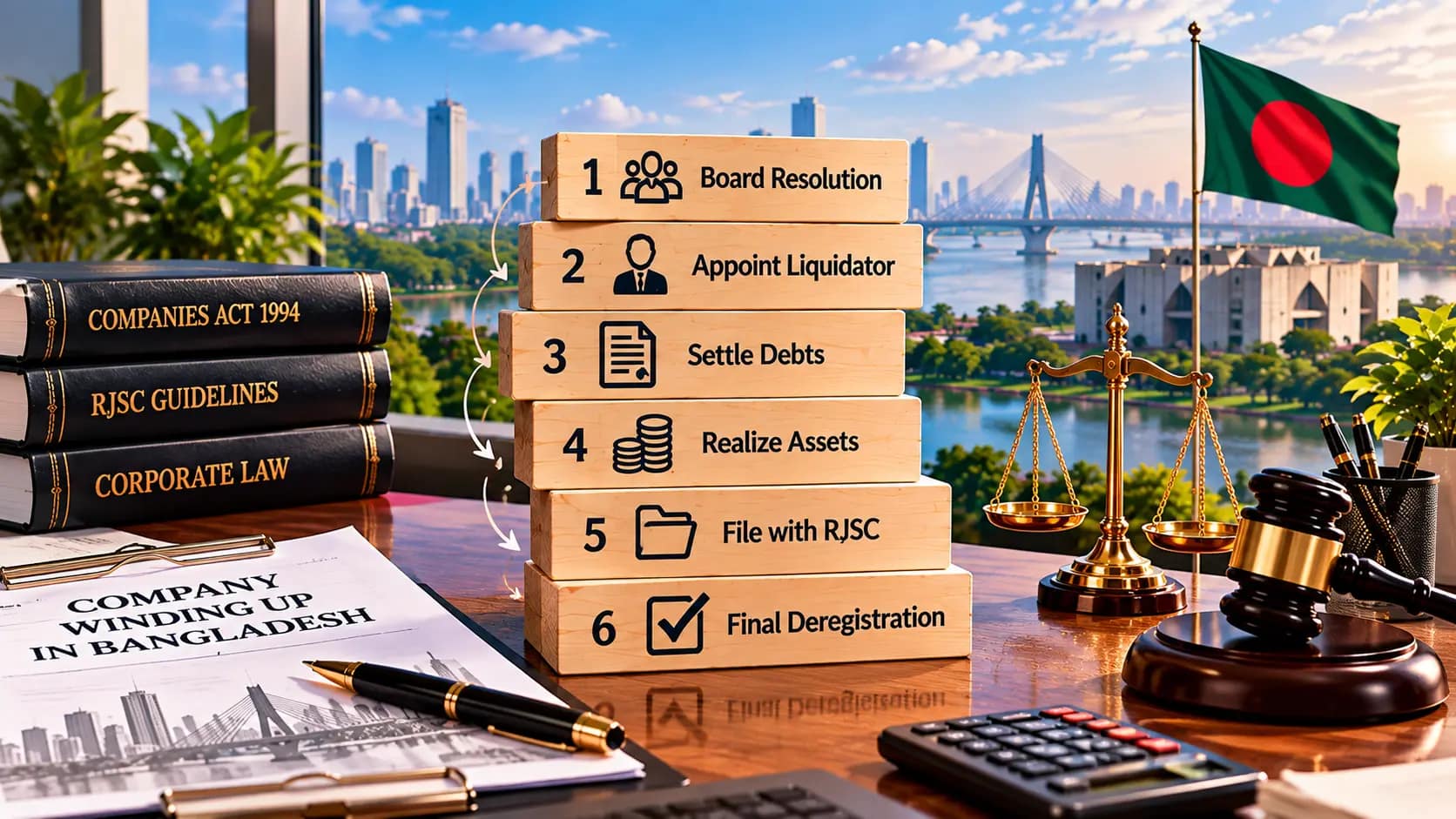
Initiating the Board Resolution
The journey to close your business starts in the boardroom. A meeting of the board of directors is necessary to formally propose closure. The directors must verify the company’s financial status and confirm it can meet its liabilities. After agreement, a special resolution to start winding up is passed. This document is the foundation for future filings. Accurate recording of minutes is essential for regulatory reviews.
Notifying Creditors and Stakeholders
Transparency is key in the company closure procedure in Bangladesh. You must inform all known creditors and stakeholders of your intent to cease operations. This ensures they can present their claims. Issue formal notices through direct communication and public advertisements. Prompt notification prevents disputes and shows commitment to fair settlement. Keeping records of these communications is vital for final documentation.
Final General Meeting Procedures
The final stage is a general meeting of shareholders to review the liquidator’s report and final accounts. This meeting fulfills the winding up application Bangladesh requirements. Shareholders must approve the final asset distribution and the entity’s dissolution. After the meeting, submit reports to the Registrar of Joint Stock Companies and Firms (RJSC). Completing these final filings marks the end of your company’s legal existence. This structured path ensures a lawful and efficient exit.
Navigating RJSC Requirements and Filings
Meeting RJSC requirements is crucial for company winding up in Bangladesh. The dissolution of your company depends on meeting specific RJSC requirements and filing obligations. The Registrar of Joint Stock Companies and Firms (RJSC) oversees the legal closure of entities. Understanding the company winding up process in Bangladesh is crucial for a valid exit under national law.
Submission of Form XII and Other Returns
Submitting various statutory documents to the RJSC is necessary for formal closure. Form XII is key for notifying the registrar of management or status changes. Accuracy is paramount here, as errors can cause delays or penalties. Along with Form XII, all annual returns and financial statements must be current. Incomplete records can lead to application rejection. Many opt for a RJSC winding up service Bangladesh to handle these complexities.
Updating the Register of Companies
After filing acceptance, the RJSC updates the Register of Companies. This step removes your entity from the active business list. Finalizing this update is the winding up procedure’s goal, securing legal closure. The table below lists essential filings for compliance during your exit strategy:
| Document Type | Primary Purpose | Submission Status |
|---|---|---|
| Form XII | Management/Status Update | Mandatory |
| Special Resolution | Formal Winding Up Intent | Mandatory |
| Annual Returns | Compliance Verification | Required |
| Final Audit Report | Financial Settlement Proof | Required |
Correctly filing all documents safeguards your interests and prevents future liabilities. Staying organized ensures a smooth transition for all stakeholders.
Liquidator Appointment Process and Responsibilities
Deciding to wind up your company necessitates the appointment of a professional liquidator. This role is critical, as the liquidator oversees the dissolution of your business. They ensure impartiality, safeguarding the interests of shareholders and creditors during the company liquidation bangladesh process.
Selecting a Qualified Liquidator
Choosing the right professional is crucial for a smooth transition. Look for candidates well-versed in the Companies Act, 1994, and local regulations. A reputable company liquidation service Bangladesh can connect you with licensed professionals familiar with RJSC requirements. Assess potential candidates based on their experience with insolvency cases. It’s vital that the liquidator remains independent and free from conflicts of interest. Their professional integrity ensures accurate and transparent statutory filings.
Powers and Duties of the Liquidator
Upon appointment, the liquidator takes control of the company’s assets and operations. Their main duty is to systematically realize assets to repay debts. They must verify creditor claims to ensure funds are distributed according to legal priority. The liquidator is also responsible for detailed financial records during the winding-up period. They must communicate with stakeholders and report to the court or RJSC as needed. Using a professional company liquidation service Bangladesh can streamline these complex tasks.
| Responsibility Area | Primary Action | Legal Objective |
|---|---|---|
| Asset Management | Inventory and Sale | Maximize Recovery |
| Creditor Claims | Verification and Audit | Fair Settlement |
| Regulatory Filing | Submission to RJSC | Statutory Compliance |
| Final Reporting | Closing Statement | Formal Dissolution |
Settlement of Debts and Asset Distribution
When liquidation starts, your main task is to settle all financial debts systematically. A successful company winding up hinges on how you handle creditor claims and manage capital. It’s crucial to follow a legal order to ensure all stakeholders get their payments before any assets are distributed.

Prioritizing Creditor Claims
The liquidator must settle debts in a specific order. You can’t give out funds to shareholders until all verified creditor claims are paid. Ignoring this order can cause significant legal complications for directors. The standard hierarchy for settling liabilities in Bangladesh is outlined below:
| Priority Level | Category of Debt | Payment Status |
|---|---|---|
| 1 | Liquidation Costs | Highest Priority |
| 2 | Secured Creditors | Primary Claim |
| 3 | Unsecured Creditors | Secondary Claim |
| 4 | Shareholders | Residual Claim |
Distributing Surplus Assets to Shareholders
After clearing all debts, taxes, and expenses, surplus assets may remain. This capital is then divided among shareholders based on their ownership percentage and share class. This marks the end of the company winding up process. To ensure a smooth distribution, follow these steps:
- Verify the final list of shareholders and their holdings.
- Calculate the net surplus after settling all liabilities.
- Issue formal notices to shareholders about the final payout schedule.
- Get signed receipts or discharge forms for the final fund transfer.
Keeping everything transparent during this phase helps avoid future disputes. Proper documentation is key for your final report to the Registrar of Joint Stock Companies and Firms (RJSC).
Government Fees and Processing Timeframes
For business owners in Bangladesh, grasping the financial and time-related aspects of dissolving a company is crucial. Effective planning helps manage resources and ensures a smooth exit strategy. This approach prevents unexpected delays and financial burdens.
Breakdown of Statutory Charges
The winding up cost in Bangladesh encompasses various expense categories. These include fees for government filings with the Registrar of Joint Stock Companies and Firms (RJSC), as well as costs for legal advice or liquidators. Additional expenses include mandatory public notices in newspapers and potential audit fees for final financial statements. Budgeting accurately for these items ensures compliance throughout the dissolution process.
Estimating the Total Duration of Closure
Understanding how long does it take to wind up a company in Bangladesh requires considering both administrative and judicial timelines. Voluntary liquidations are generally quicker, but court-ordered processes take longer due to hearings and creditor reviews. A simple voluntary winding up might take six to twelve months. Yet, complex cases with significant debt or shareholder disputes can extend this timeframe. Such cases necessitate diligent monitoring of all regulatory filings and court schedules.
| Category | Estimated Cost Range | Estimated Timeframe |
|---|---|---|
| RJSC Filing Fees | Low to Moderate | 1-2 Months |
| Professional/Legal Fees | Moderate to High | 3-9 Months |
| Publication & Audit Costs | Low | 1-2 Months |
| Total Process | Variable | 6-12+ Months |
Common Challenges During the Liquidation Process
Navigating the company winding up in Bangladesh process requires careful preparation for common obstacles. The legal framework offers a roadmap, but the journey is rarely smooth. Anticipating potential delays is crucial for a smooth exit from the market.
Handling Outstanding Tax Liabilities
One major hurdle is settling tax obligations with the National Board of Revenue (NBR). Before finalizing the company liquidation process Bangladesh, a tax clearance certificate is necessary. Unpaid VAT, corporate income tax, or source tax can indefinitely halt your progress. Thoroughly auditing your financial records early is vital. Addressing any discrepancies immediately can prevent penalties. A professional company closure consultant Bangladesh can help reconcile accounts and communicate with tax authorities.
Resolving Disputes with Minority Shareholders
Internal conflicts often arise over asset valuation or fund distribution. Minority shareholders may feel overlooked during the winding up of private limited company in Bangladesh. These disputes can lead to lengthy litigation. To manage these risks, maintain transparent communication with all parties. Clear documentation on asset liquidation and debt settlement builds trust. If tensions persist, a company closure consultant Bangladesh can mediate. Proactive management of these challenges is key to a successful company liquidation process Bangladesh.
Finalizing Your Business Exit Strategy
Closing a business involves a detailed plan of legal, financial, and administrative steps. A well-executed company closure procedure in Bangladesh safeguards your reputation and avoids future legal troubles. It’s crucial to manage these tasks carefully.
It’s essential to keep all statutory filings up to date during the transition. A structured business closure process in Bangladesh ensures you handle creditor claims and asset distribution transparently. This approach maintains integrity and clarity throughout the process. Many entrepreneurs seek professional help to simplify the complexities of corporate law. Hiring a company dissolution service in Bangladesh offers the confidence needed to finalize your exit strategy effectively. This support is invaluable.
Proper planning is key to navigating the regulatory landscape smoothly. A seamless company dissolution in Bangladesh enables you to start your next venture without legal encumbrances. It’s a crucial step towards a clean slate. Whether your journey began with a standard company registration in Bangladesh, foreign company registration in Bangladesh and Joint Venture Company in Bangladesh, ending it properly through formal winding up protects your interests.
Do you have specific questions about your entity’s closure requirements? Common concerns include the timeline for RJSC approvals and settling tax obligations.
FAQ
Can a private limited company be closed in Bangladesh?
Yes, you can legally end your business operations. The Companies Act, 1994, governs the winding up of private limited companies in Bangladesh. It covers both solvent and insolvent businesses. The law ensures all legal obligations are met before dissolution.
What is company winding up in Bangladesh exactly?
Company winding up in Bangladesh is the formal process of closing a company. It starts the liquidation process, where assets are sold to pay creditors. Any remaining funds are then distributed to shareholders. This step precedes the company’s deregistration by the Registrar of Joint Stock Companies and Firms (RJSC).
How to wind up a company in Bangladesh effectively?
To wind up a company in Bangladesh, first determine if it’s voluntary or court-ordered. The process involves passing a special resolution, appointing a liquidator, and notifying the RJSC. A comprehensive guide ensures compliance with legal requirements.
Who can apply for company winding up in Bangladesh?
Several parties can initiate winding up. Shareholders can start a voluntary closure, creditors can apply if unpaid, or the court may intervene. You can apply through the High Court Division or a members’ resolution, based on your company’s financial status.
What documents are required for company winding up in Bangladesh?
You’ll need the Declaration of Solvency, a certified copy of the special resolution, and audited financial statements. Specific documents like Form XII and the liquidator’s appointment notice are also required. Knowing these documents is crucial to avoid delays.
How long does it take to wind up a company in Bangladesh?
The time frame for winding up varies. Voluntary processes usually take 6 to 12 months. However, complex cases or extensive debt settlements can extend this. Timely RJSC filings can expedite the process.
What is the difference between winding up and the company strike off process in Bangladesh?
Winding up involves a liquidator to settle assets and liabilities. Strike off is for companies with no assets or liabilities and never commenced business. For active or complex businesses, formal dissolution is recommended over strike-off.
What is the typical winding up cost in Bangladesh?
Costs include government fees, newspaper ads, and professional fees. While costs vary, professional services ensure compliance and prevent future liabilities.
Why should I consider an RJSC winding up service in Bangladesh?
Professional assistance simplifies the winding up process. It ensures correct filings from start to finish. This is crucial for a legal and protected exit.
What is company winding up in Bangladesh?
Company winding up in Bangladesh is the legal process of dissolving a business entity and settling all its obligations.










Leave a Reply